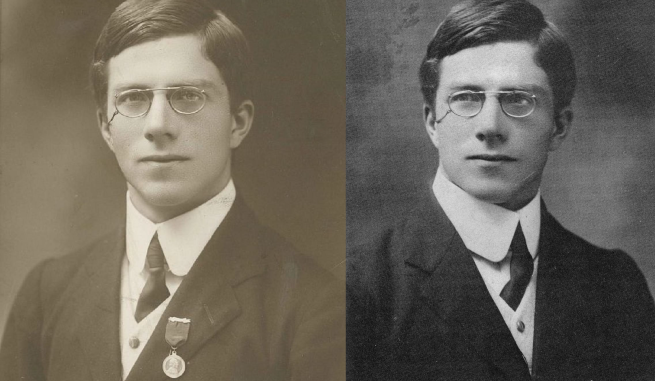
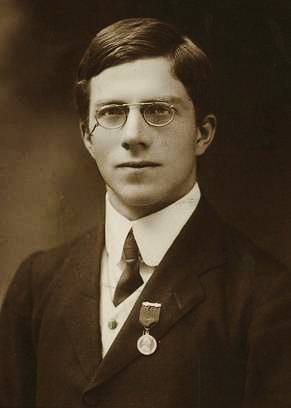
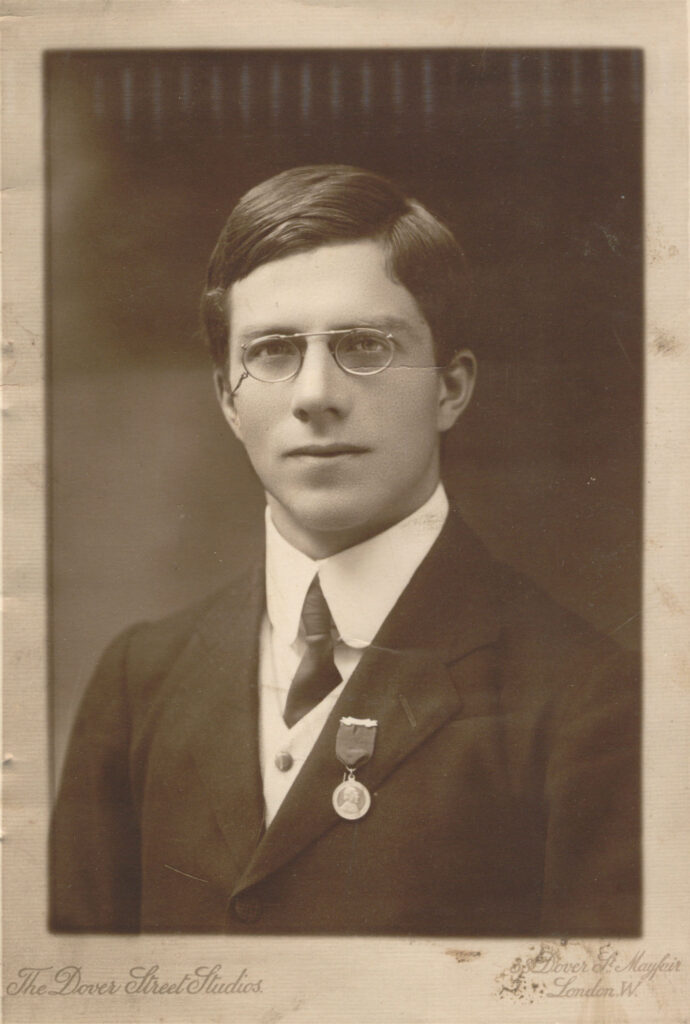
In 1913, Ronald Aylmer Fisher (1890-1962) visited the Dover Street Studios in Mayfair, London, to have some photographic portraits made. He was 23 years old. He had just earned a first class honours degree in Mathematics from Cambridge University, and he was starting employment as a statistician in the City of London and as a teacher.
Fisher chose to wear a medal in some of the photographs taken on this occasion. This was the “Galton Medal”.
The Galton Medal was given to delegates at the 1912 International Eugenics Congress, the first of three such congresses (program). The medal was given to attendees simply for their attendance. It was not earned, and it was not presented as an award. It was not given to honour the person wearing it.
Fisher attended the 1912 Eugenics Congress as a steward. He said he was representing the tiny, student-driven Cambridge Eugenics Society.
In the 1900s and early 1910s, medals were common tokens at events of this scale, much in the same way cloth tote bags are common tokens for attendees today. These medals tended to be made of tin or some similar light, soft metal. Occasionally token medals were cast in bronze. (Search online auction sites – e.g., eBay.co.uk – to see the variety and range of other medals in this period.) It’s a measure of the scale and cost of industrial production that these souvenir trinkets could be made at such low cost and customisation. These medals also are common on the ephemeral market.
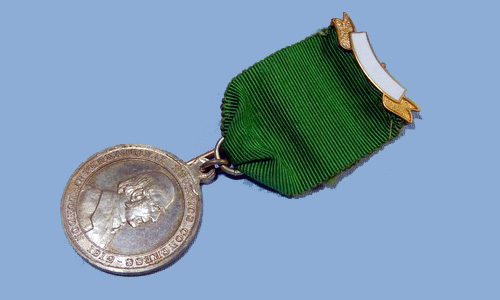
What’s the “Galton Medal”?
The Galton Medal for the 1912 Eugenics Congress shows Francis Galton (1822-1911) in profile. Around the edge, the medal reads “International Eugenics Congress | London 1912”. Galton was a charismatic promoter of the Eugenics Education Society, and they held him in great esteem (discussed by Farrall [1969] 2019). After Galton’s death in 1911, many eugenics-related projects took on his name (such as Pearson’s activities at University College, University of London) while competing to become heir to some part of his legacy. Because the 1912 Eugenics Congress was held in London, it also became something of a memorial for Galton.
Fisher Promoted Eugenics
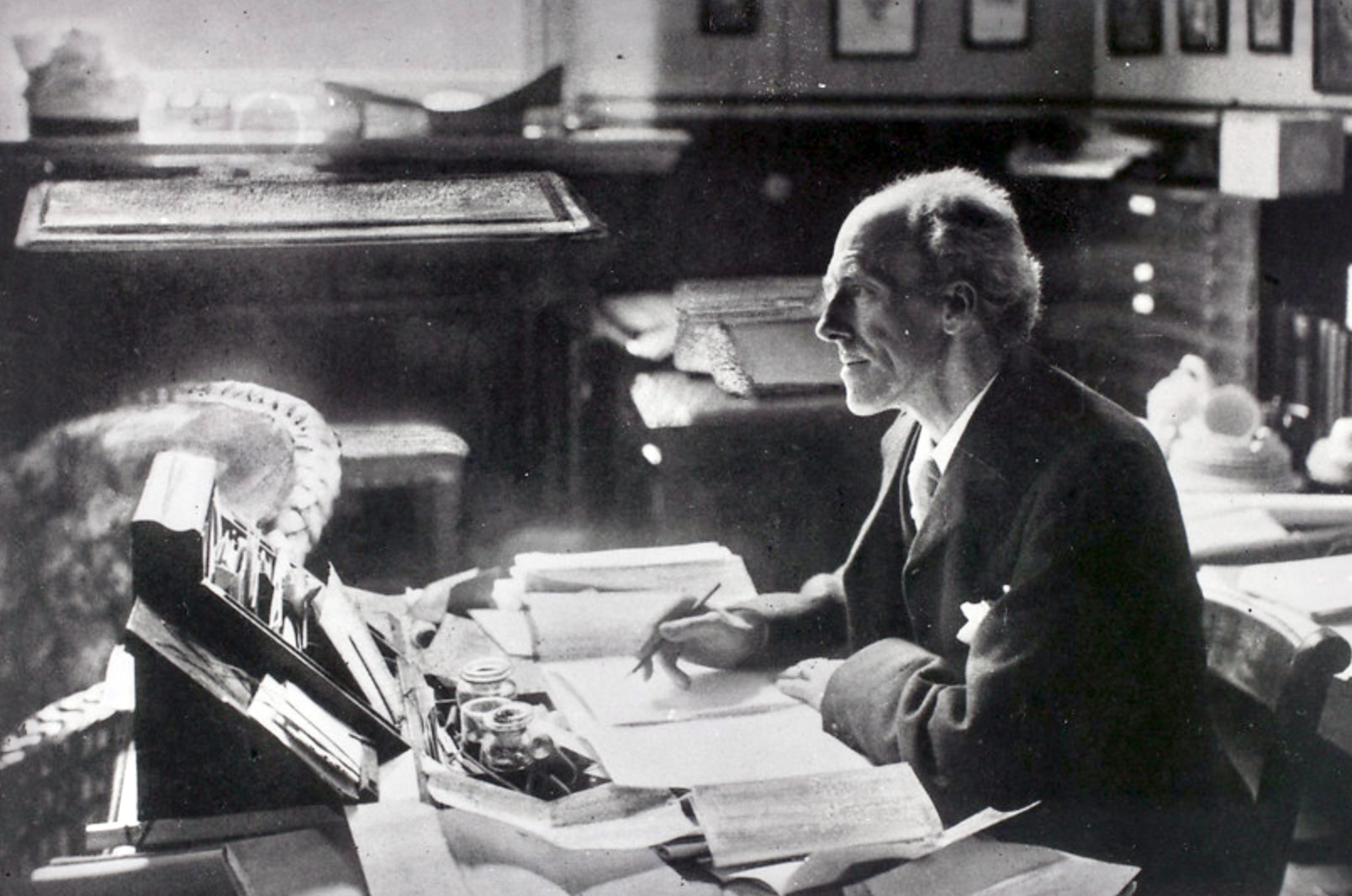
In his 1913 photographic portrait, Fisher was signalling his support for eugenics. That support was full-throated and passionate. Fisher was fully engaged with eugenics promotion while at Cambridge (1909-1912). Aylward (2021 and 2025) has written in detail about Fisher’s major, career-long eugenics activities. Fisher wrote a considerable number of commentaries, as well as a few academic articles, for Eugenics Review, the official journal of the Eugenics Education Society (later the “Eugenics Society”). In 1934, Fisher succeeded Karl Pearson as Francis Galton Professor of Eugenics at University College, University of London. As a duty of this post, he also became director of the Eugenics Laboratory (but not the Biometric Laboratory or the Applied Statistics element of Karl Pearson’s former empire).
Don’t Be Fooled
The photographic portrait of Ronald Fisher as a young man circulates widely in histories of British eugenics. It’s an image that is easy to misinterpret. Perhaps, you might think, Fisher was a war hero, and he’s wearing a medal for his military service. That conclusion is in error. Fisher was no war hero. He never stood up for military service as he was exempted owing to poor eye sight. This did not stop him from writing and campaigning about his perceptions of ethnonationalist degeneration and eugenics.
The timing is important for interpretation. Fisher has completed his university degree, left Cambridge, and moved into employment in London. He had attended one of the largest events of his life. He was redefining his identity – away from the protected confines of Gonville and Caius College and towards something new. We know what happens next. He did not.
Image specifics
“R. A. Fisher as a Young Man” original in RA Fisher Digital Archive, Rare Books & Special Collections, Barr Smith Library, University of Adelaide.