You never know what you’ll find searching through storage spaces at UCL. I previously wrote about some medical data cards re-discovered. Last year, I was invited to help sort through some historical materials in storage managed by UCL Department of Statistical Science (aka “Statistics”). What we found, really re-discovered, was a big surprise.
On staff in Statistics is Stephanie Dickinson. She’s partly employed as Exhibitions Keeper to manage historical property in the department. At first, we were looking for Brunsviga calculating machines to use in the exhibition, Prejudice in Power, which considered some of UCL’s history of eugenics research. To get to these items in the storage space, we needed to move some old furniture. Including a chair. “What’s this?,” I asked.
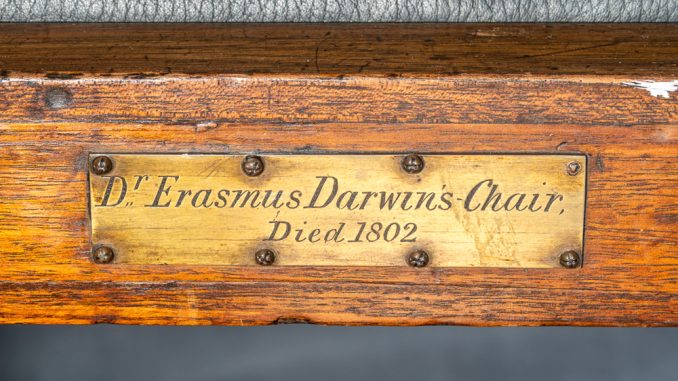
It was a sitting chair from the late 18th century. On the frame was a brass plate, “Dr Erasmus Darwin’s Chair, | Died 1802”.
Erasmus Darwin (1731-1802) was a prominent English man of science in the 18th century. He was celebrated in English literary and philosophical circles. especially for works such as The Loves of the Plants(1789) and Zoonomia (1794-96). He also was part of the famous Lunar Society of Birmingham. Later, he was celebrated for being grandfather to Charles Darwin (a fact eugenicists spuriously use as ‘evidence’ for the inheritance of intelligence).
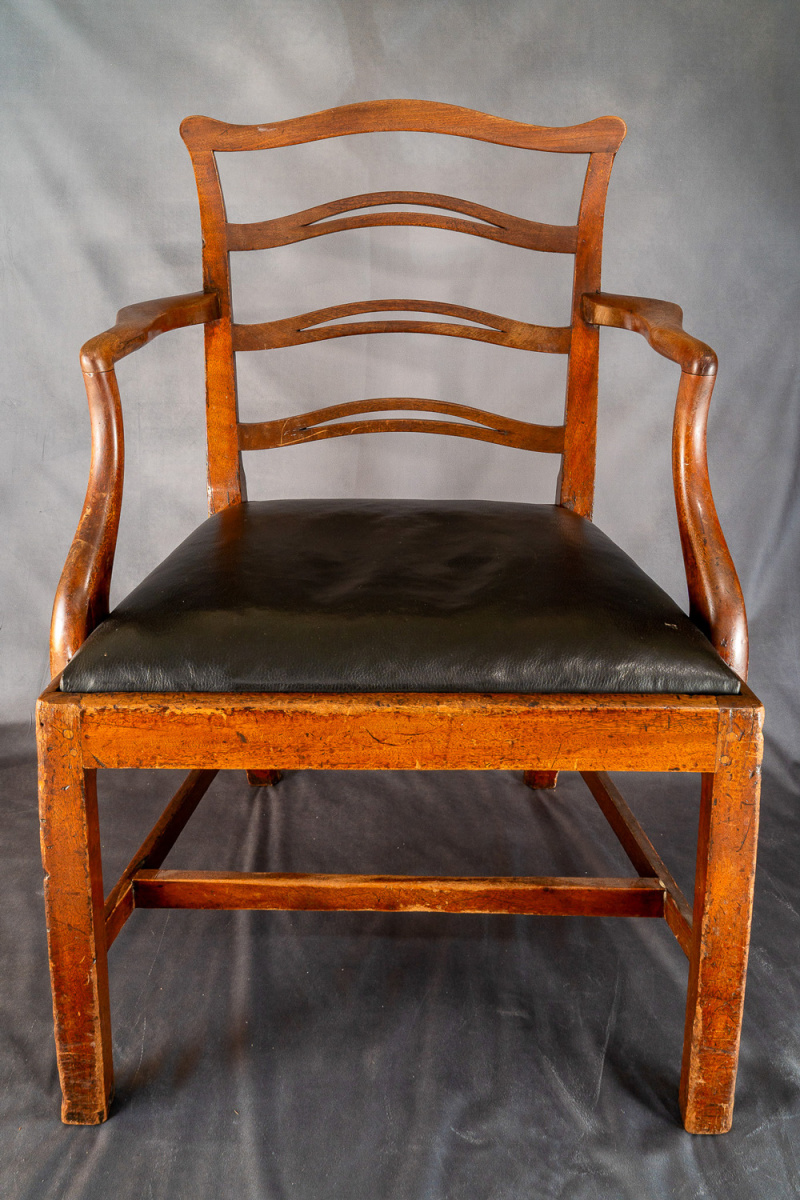
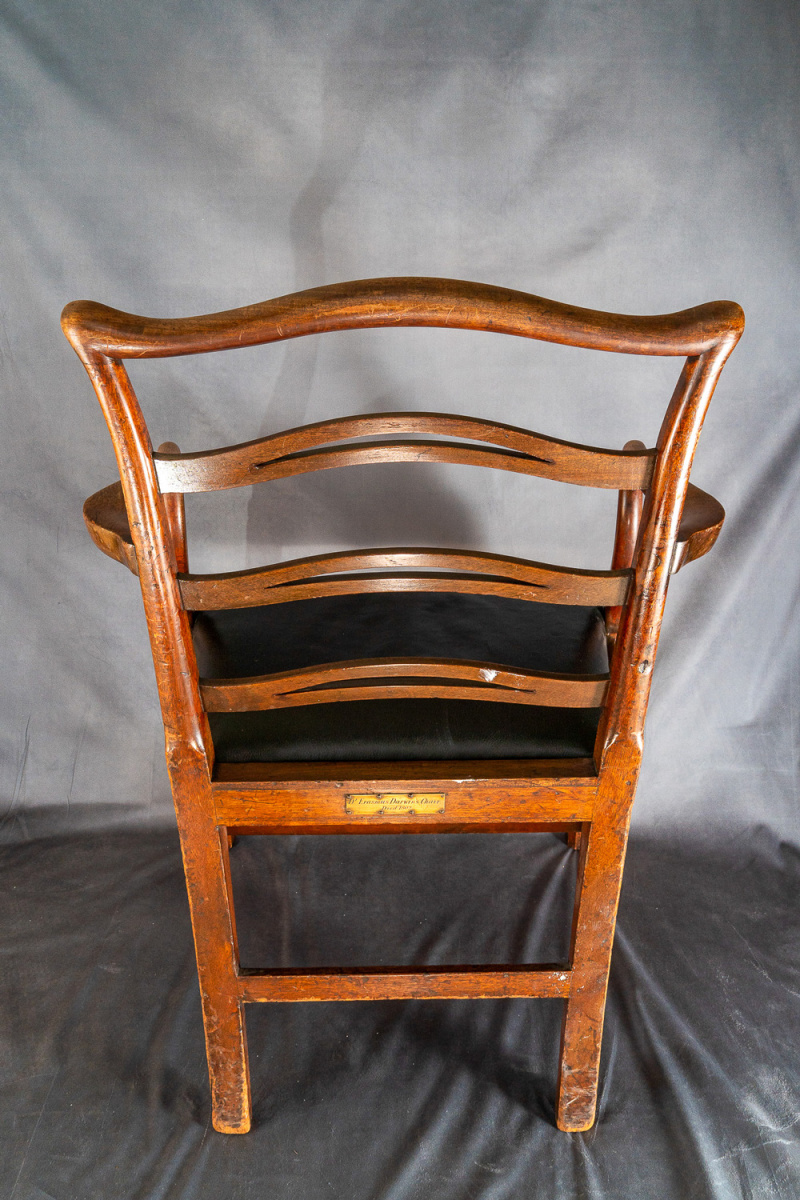
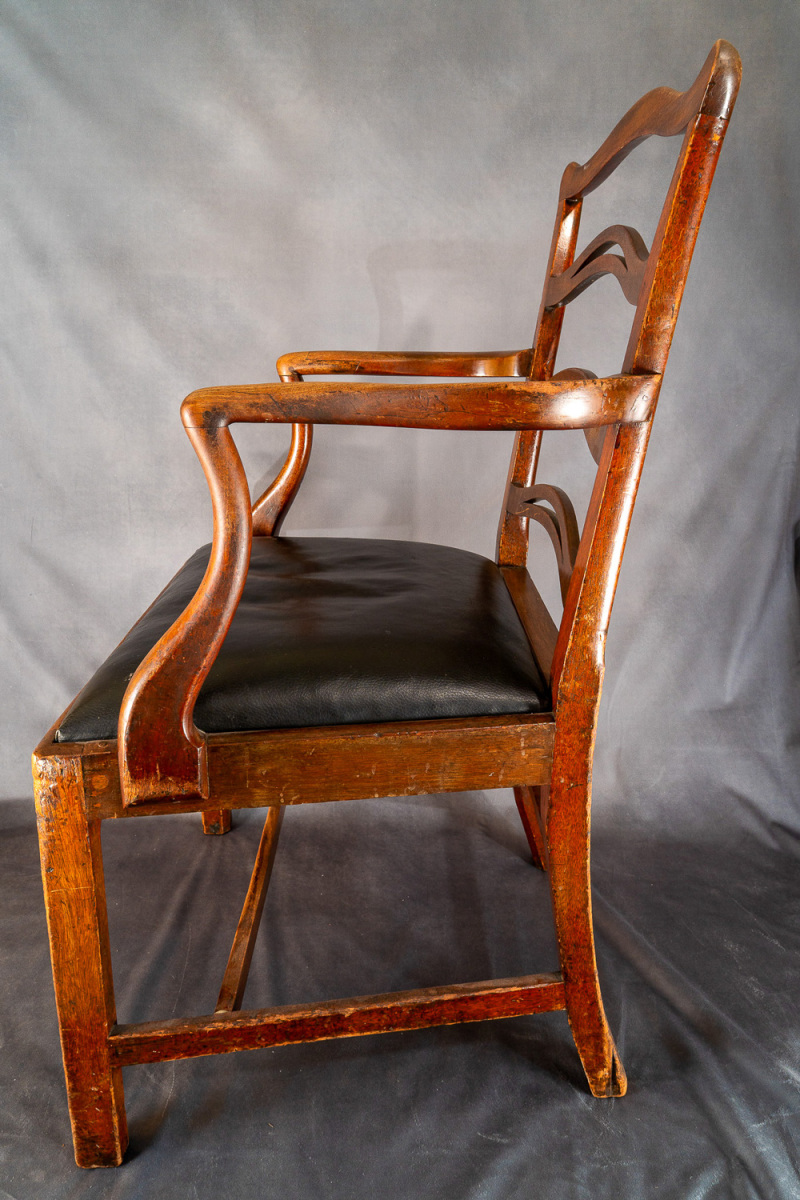
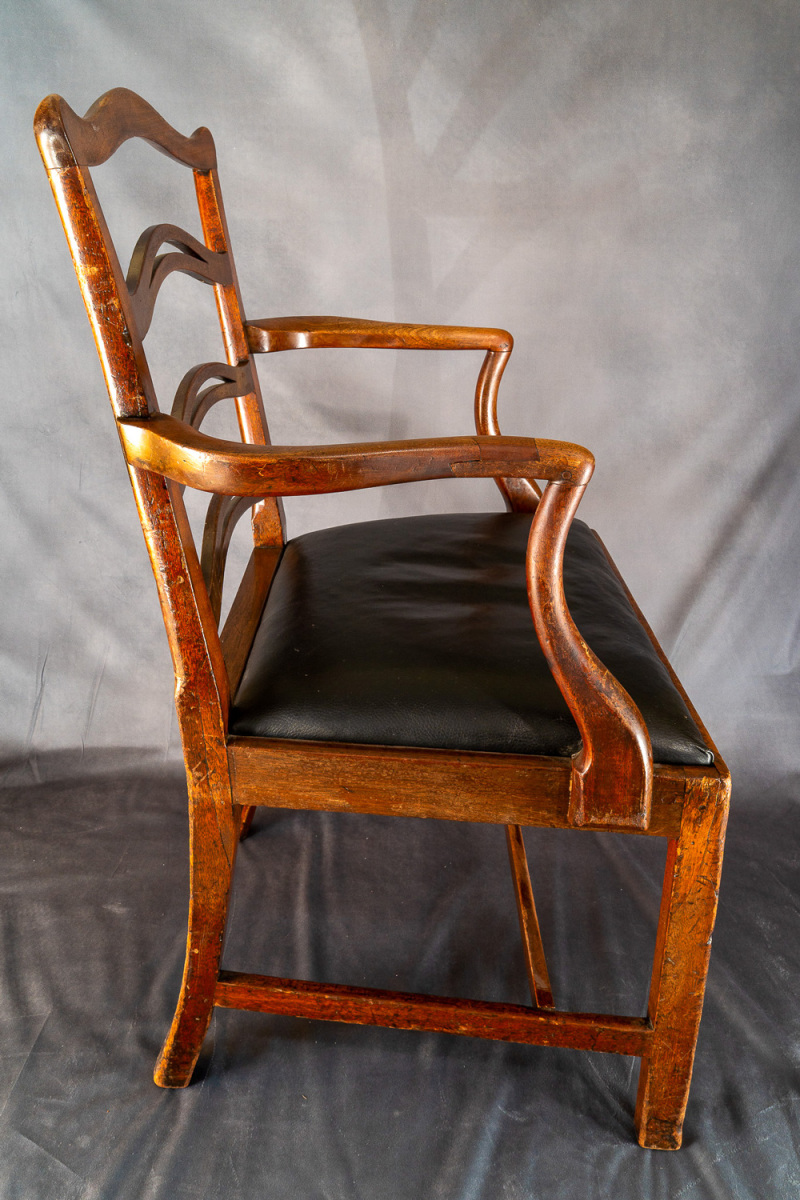
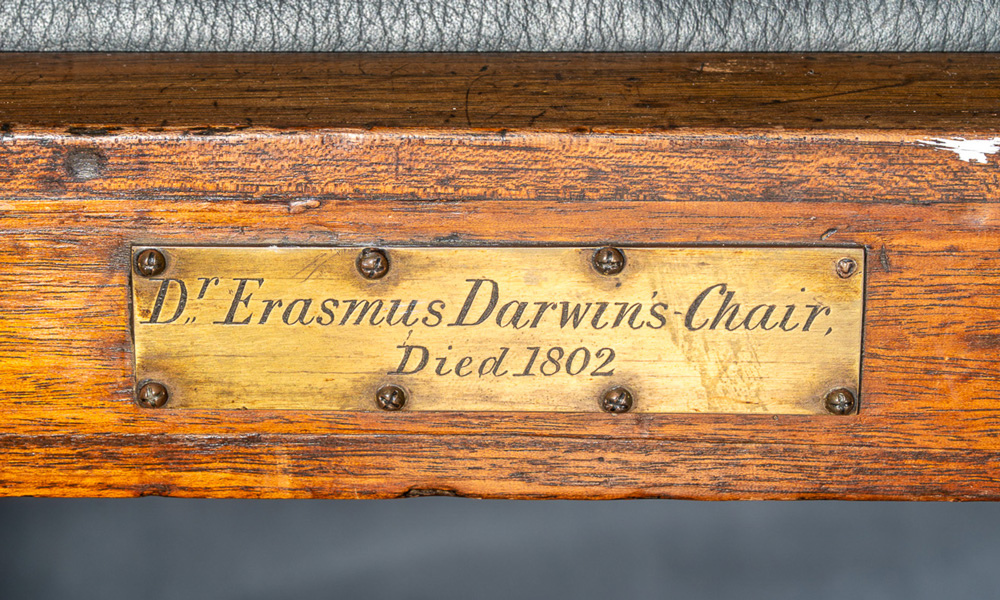
What Was This Chair Doing in Storage at UCL?
After Erasmus died, the chair stayed in his family. At some point, another grandson, Francis Galton (1822-1911) received it as a memento. He kept it at his home on Rutland Gate, South Kensington, London. Galton had no biological children to inherit. In his Will, after leaving notable sums to people close to him, Galton bequeathed the “residual” of his estate to University of London on the understanding the financial benefits would support a eugenics programme being developed by Karl Pearson. The university also inherited Galton’s property and possessions. After Galton died in 1911, and with permission, Pearson removed a significant number of items (both scientific and personal) from Rutland Gate. He later displayed much of it as Galtoniana at University College. Pearson’s removal included furniture. Erasmus Darwin’s chair was taken by Karl Pearson as part of his general hoovering up of Galton’s possessions in 1911.
The chair sat in Pearson’s rooms at University College until he retired in 1933. At that point, the department he managed was divided into two parts. His son, Egon Pearson, became head of a new Department of Statistics. Ronald Fisher became head of a new Department of Eugenics. Statistics stayed in place; Eugenics was relocated. Though Fisher was put in nominal charge of the Galtoniana materials, he didn’t do much with them and the furniture seems to have fallen under the control of Statistics.
Moving the Chair
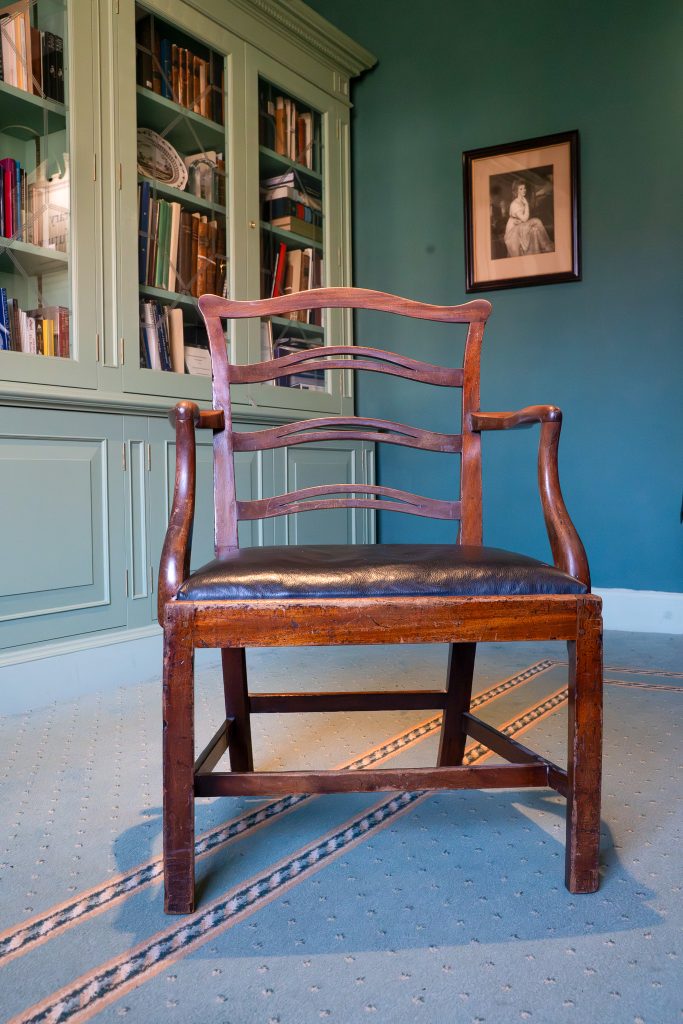
Time moves on. Over the years, Statistics amassed a significant number of historical objects. But space is at a premium at UCL, and the department decided it no longer wanted to manage that inventory. Stephanie’s job was to help find suitable new homes for everything. The brass plate on the chair clearly identified it as once the property of Erasmus Darwin. I didn’t want this item to wander off, much less end up in a clearance, so I was keen to help its relocation.
First, I suggested UCL Museums and Collections. They have first right of refusal over anything of historical value in the university. They declined to take it. Next, I know that standard practice for disposal in the collections world is to consider donation to reputable institutions.
Many years ago, I gave a talk for the Lichfield Science and Engineering Society, and I was hosted most graciously by them and folks associated with Erasmus Darwin House. I asked informally if they’d be interested in receiving the chair as a donation. Needless to say, they immediately said “yes”. Stephanie secured the agreement of Statistics (who were delighted to make a donation in this way) and UCL’s central collections teams (ditto).
Hiring professional couriers proved prohibitively expensive. To ensure safe delivery, I personally delivered the much-wrapped chair to Erasmus Darwin House. Job done, the chair was immediately placed on exhibit in a specially reserved place.
Word of the chair’s return made local news in Litchfield. A happy ending made possible by highly committed Stephanie and her supportive management in Statistics.
You can visit the chair today at Erasmus Darwin House.