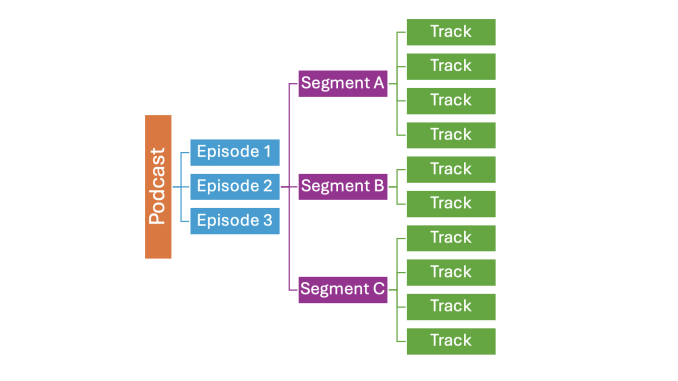
Vague terminology in podcasting confuses expectations and ambitions. A proposal to “make a podcast” can sound simultaneously daunting and simple. One person might describe a short mp3 dictation of a story as a “mini podcast”. Another might expect “my podcast” to involve a large-scale audio serial supported by a dense promotion campaign. Most people kind-of know what everyone else is talking about, but it often takes a minute, and a few examples, to zero-in on the specifics. Some stability can come with just four words so we all get down the line faster and stronger.
- podcast
- episode
- segment
- track
Think of “podcasting” as an overarching category of work combining activities such as content design, content creation, and technical production. It also includes marketing, distribution, and evaluation of series, their episodes, and component tracks. These activities may occur in the commercial, academic, or entrepreneur sectors. Those four elements – podcast, episode, segment, and track – offer a hierarchy for describing parts and their combination.
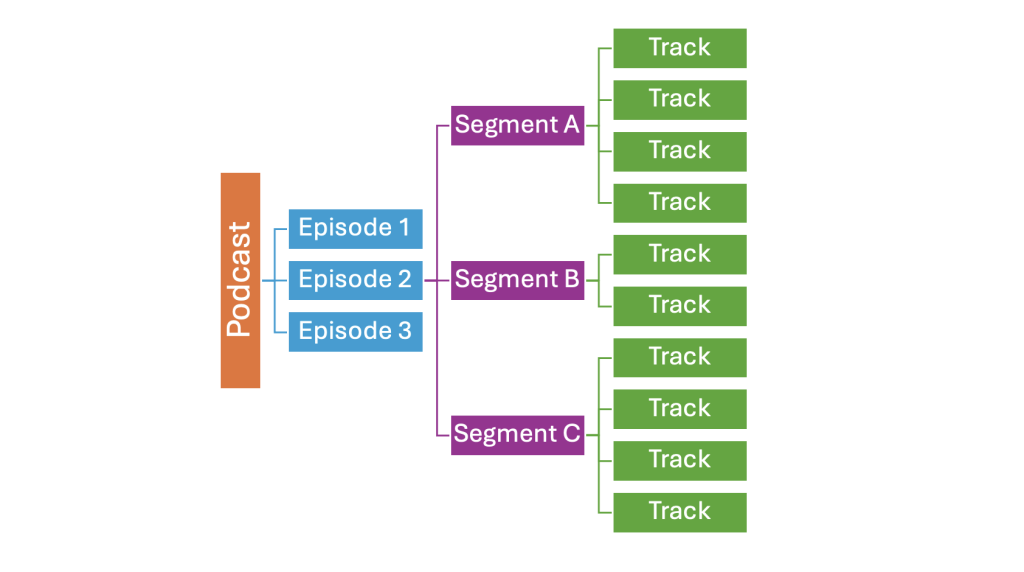
To elaborate using an example, consider Table 1.
| Term | Definition | Example |
| Podcast | A series of coordinated episodes presented as a package within a unified brand. One RSS feed normally distributes one podcast. Synonymous with “show” or “serial”. | WeAreSTS |
| Episode | Individual standalone instances of one podcast, distributed in series, often in a sequence structured for cumulative consumption, one episode at a time. | #208 When Fieldwork Goes Wrong Go Public: Adventure in Venezuela |
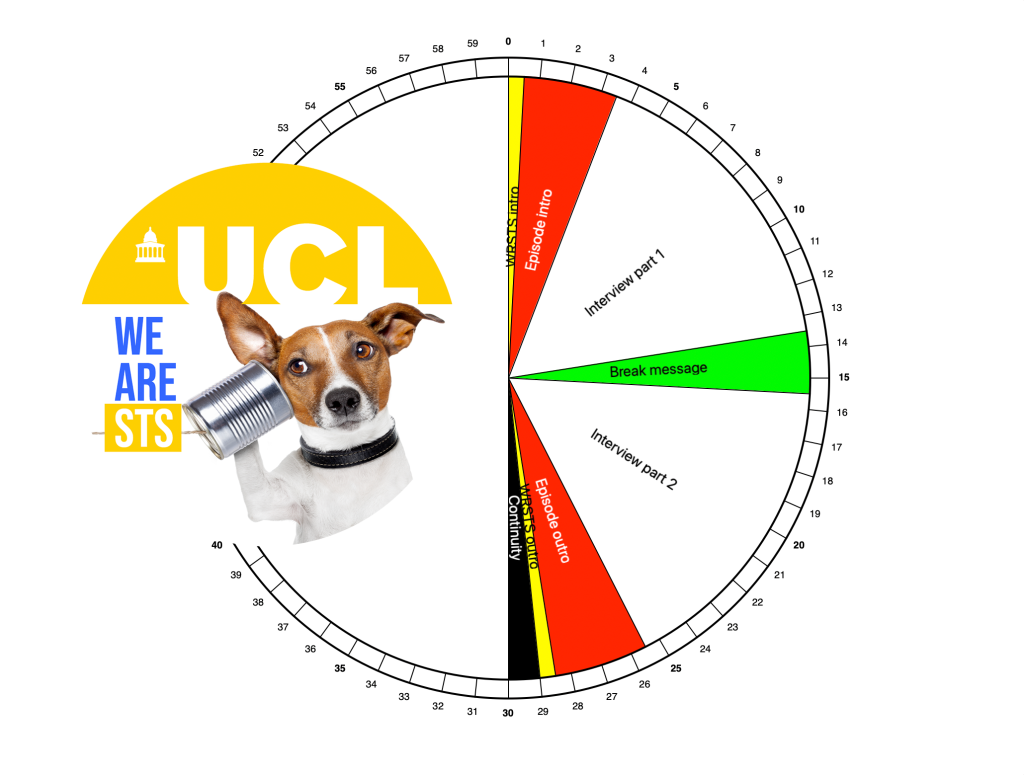
| Segment | Subdivision of episode, frequently produced as a modular or standalone product. Synonymous with “section” or “chapter”; comparable with “movement”. | Interview part 1 |
| Track | Blocks of content used to assemble an episode or segment. Synonymous with “component” or “element”. | narration | music | sound effect |
Table 1. Hierarchy of elements in podcasting demonstrated for the podcast, “WeAreSTS”.
Terminological clarity can seem tedious. The benefit of specifying these four terms is an increased clarity about work and deliverables. The simple truth is that podcasting involves a diverse array of activities. These four terms give some benchmarks – not absolutes, not essentials, not impositions – to bring project work together.
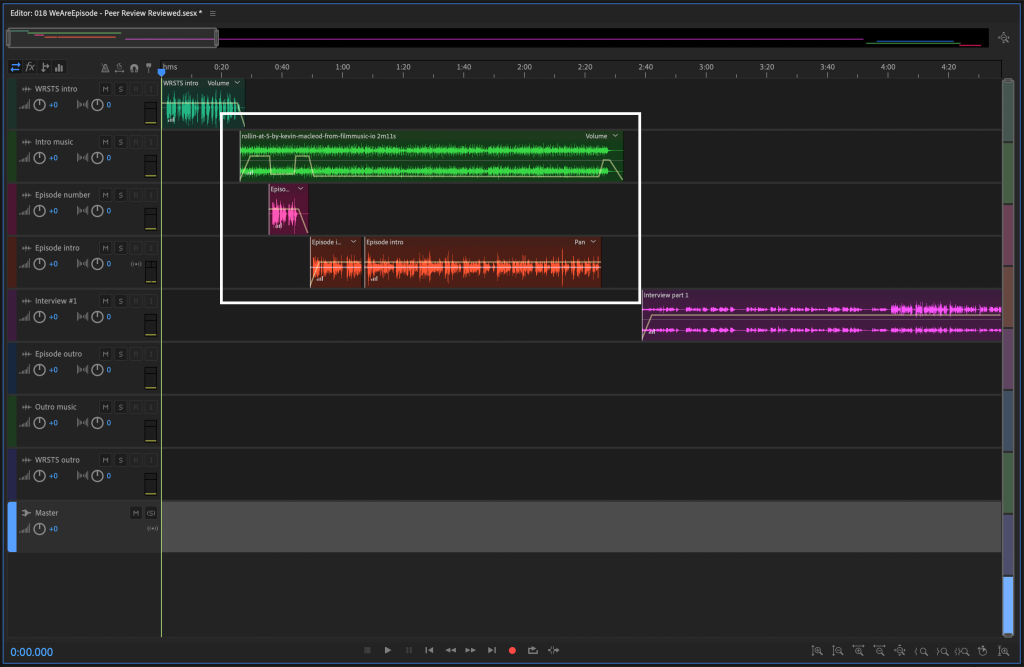
Segment work makes use of modularity and is an important from traditional broadcast. Podcast episodes don’t always (often?) build neatly from segments. But many do. Production editors will know the value of thinking this way if only for heuristic purposes.
This vocabulary helps me talk about podcasting with students in ways that help us focus on specific types of work and how pieces can be assembled into whole products. A student who wants to get started with podcasting projects can be overwhelmed with everything that’s involved in planning, producing, and marketing. But get them started with a short endorsement, or ask them to mix a few tracks for a show intro, and they will be off and running with confidence. In the same way, coursework projects can be defined on different scales to adapt to available time and effort.
I write about how podcasting offers a versatile tool for coursework assignments:
- Joe Cain. 2026. Podcasting is a Versatile Tool for Assessment: Four Ways to Diversifying Class Assignments, in Camilo Salazar, Lindsay Persohn, Joanna Duchesne, Carl Hartley, and Carola Boehm (eds). 2026. Podcasting Between Entertainment and Education: Balancing Media Industry Expectations within Educational Contexts. Routledge. ISBN 9781041150152.