
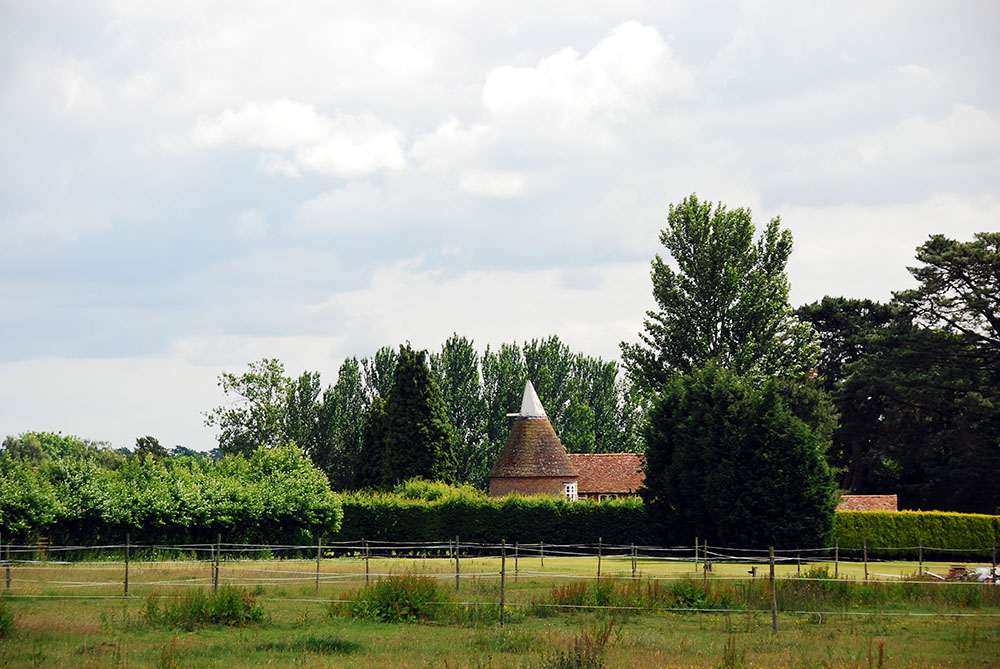
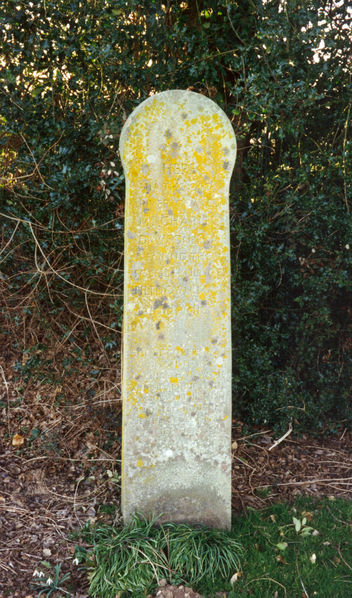
The infamous, fraudulent “Piltdown Man” materials (named Eoanthropus Dawnonis, or the Dawn Man) were planted in a Pleistocene gravel pit on Barkham Manor near the village of Piltdown, East Sussex. This location lies on the rolling downland south of the Ashdown Forest. Though the exact pit is on private land near the modern-day hamlet, a memorial stonemarks the general site of the notorious archaeological fraud. The web is full of commentaries about Piltdown Man and its exposure as a fraud. But where is the original locality?
Piltdown, East Sussex, of course. The exact location – the spot on the map – is well known to specialists. The location is “Barkham Lane, Uckfield, TN22 3XE, East Sussex”.
Piltdown Location
The locality is not open to the public. It is located on private land. Permission is required to gain access, so please don’t just show up there and expect to see the location or the memorial. Remember: the Piltdown excavations occurred during road building on this private estate.
Piltdown is a small village in East Sussex, England, located near Uckfield. It sits in the rural Weald countryside, featuring scattered houses and farms along quiet country lanes. The village has a church, a pub called the Piltdown Man, and offers peaceful rural living with convenient access to nearby towns and the South Downs National Park.




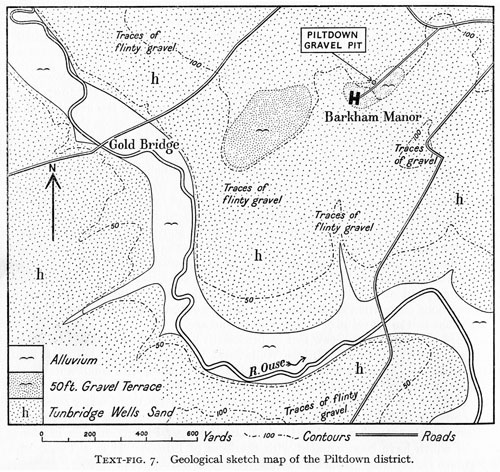

Geology
The geology of the Piltdown locality is described:
- Edmunds, FH. 1955. “9. The Geology of the Piltdown Neighbourhood,” Bulletin of the British Museum (Natural History). Geology 2(6):273-275.
The Piltdown material was mentioned at the 1925 Scopes Monkey Trial, before the fraud was widely recognised. At the time it was described as the most ancient English human relic. The physical remains consisted of a crushed woman’s skull and a jaw that scarcely could be distinguished from that of a chimpanzee. Scientists noted that the skull was exceedingly thick and its capacity was much less than that of modern man, although it was distinctly human; conversely, the jaw approached that of an anthropoid. The discovery showed a curious admixture of simian and human characteristics. The remains are considered an approach toward man in very ancient strata, with an estimated age of about 200,000 to 300,000 years. There was significant controversy surrounding the significance of the fragments, partly because they were badly damaged and scattered before reaching scientific hands.